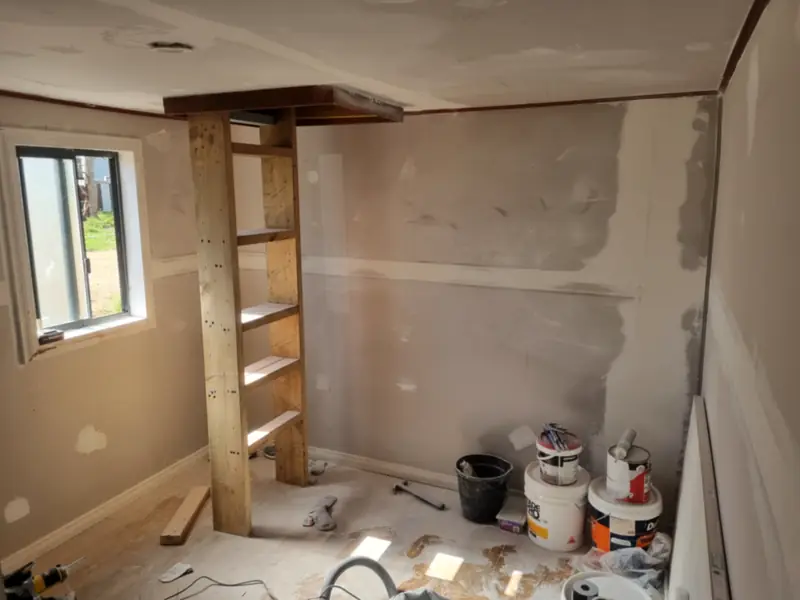
A handyman takes on everyday repairs and maintenance: patching and painting walls, fixing doors, locks, flyscreens and gates, mounting TVs, assembling flat-pack, cleaning gutters and clearing yards. Electrical, plumbing and gas fitting work in South Australia is a different matter. It has to be done by a licensed tradesperson, who must give you an electronic certificate of compliance (eCoC) for most jobs. Larger building work needs a licensed builder. Lindsay points plumbing, gas and electrical work to a licensed specialist.
Jobs that suit a handyman
These are the jobs on Lindsay’s list:
- General repairs and home maintenance: doors that stick, loose handles, broken fittings
- Painting, touch-ups, and plaster and gyprock repairs
- Window, flyscreen, door, lock and gate repairs
- Home window tinting
- TV mounting, pictures, mirrors and flat-pack assembly
- Gutter cleaning, pressure washing and exterior cleaning
- Garden and yard clean-ups, lawn mowing, whipper snipping and rubbish removal
- Between-tenancy repairs and end-of-lease touch-ups
See every handyman service for the detail.
Electrical work needs a licensed electrician
Power points, light fittings, ceiling fans, hardwired smoke alarms, switchboards and moving wiring are all electrical work. Under SA rules, electricians must give you an eCoC for most of their work, within 30 days of finishing. The SA Government’s certificates of compliance page notes that minor maintenance such as replacing a light bulb doesn’t need one.
A common example: mounting a TV on the wall is handyman work, but adding a power point behind it is a job for an electrician.
Plumbing and gas need a licensed plumber or gas fitter
The same page lists the plumbing work that needs an eCoC (within 7 days): pipework and fixtures from the mains water supply or sewer, sanitary plumbing and drainage, installing or replacing a water heater, and backflow prevention devices. Gas fitters must give one for work on gas pipes and for installing or replacing appliances such as hot water units and stove tops. Without an eCoC, insurers may refuse a claim if that work later causes a fire or damage.
Building work and the $20,000 line
Builders must be licensed to carry out most types of domestic building work, according to the Legal Services Commission’s Law Handbook. From 10 November 2025, domestic building work under $20,000 is classed as minor domestic building work, up from $12,000. Above that line the rules tighten: a contract of $20,000 or more must be in writing, and where the contract price is over $20,000 and development approval is needed, the builder must hold building indemnity insurance (Law Handbook: building work).
Some structures, such as verandahs, sheds and retaining walls, can also need development approval. Check with your council or the PlanSA portal before work starts.
Older homes and asbestos
If your home was built or renovated before 1990, it might contain asbestos, according to the Asbestos and Silica Safety and Eradication Agency. It can be in wall and ceiling sheeting, especially in wet areas, as well as in eaves, gutters, fencing and sheds. The agency says to keep this in mind before any repair, even drilling a hole to hang a shelf. If you think a wall or ceiling might be asbestos sheeting, say so when you ask for a quote.
How to check a licence
Consumer and Business Services keeps a public register. Use Find a licence holder to search builders, plumbers, electricians and gas fitters by name or licence number. CBS recommends always checking that the person doing the work holds the right licence.
Not sure which side of the line your job falls on? Describe it on the quote form or call Lindsay on 0481 195 152. If it’s handyman work he’ll quote it free, and if it needs a licensed trade he’ll tell you. See also what a handyman costs in Adelaide.